Voting Is Hard. Here's What We Have So Far.
The Voter Guider came out of a collaboration trying to figure out the "voting is hard" problem. We're still trying to figure it out, but this is what we have, for ballots in Seattle, Fort Collins, Monterey Park, and Montebello.
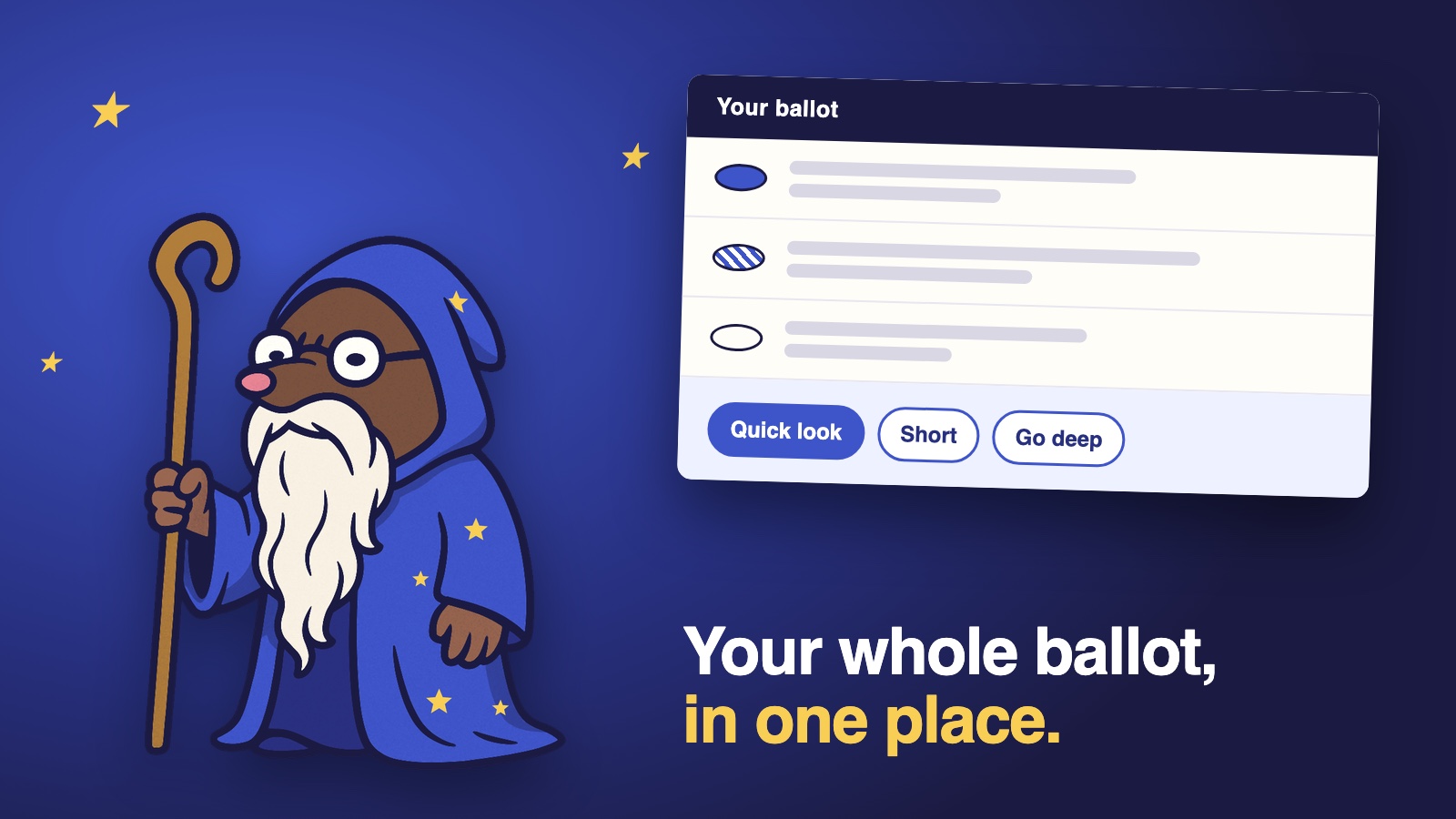
It looks like your ballot. Races and measures appear in the printed order, built from official sample ballots and voters' pamphlets. You can mark a pick as decided, leaning, or not sure, and it saves as you go.
Everything says where it came from. Candidate statements, endorsements, fact-checks, bar ratings, and published voter guides all sit next to the choice they're about, with a source. If we can't source something, it isn't there. That rule took a while to earn: an early draft of the data was generated rather than researched, and it listed the wrong people, so I deleted it and started over.
Videos come in three sizes. Most people have less than an hour for their whole ballot, so candidates get a quick look, a short video, or a deeper watch: bite, snack, meal. Long forums are cut down to each candidate's own turn, by the same rule for everyone. A candidate forum works a lot like a council meeting, so this week I pointed Counciloris's speaker detection at two of them, and it caught a clip that ran into the next candidate's answer.
It helps with the hard parts. There's a quiz that compares candidates only on positions they've stated, plain-English explanations of what each office does, and judge evaluations, for the part of the ballot nobody knows what to do with.
It still doesn't tell you how to vote. And Moleses, our nearly blind mole wizard, finally has a color robe to go with his unofficial status.
If you vote in one of those places, try it on your ballot and tell me what's missing. Then go vote.